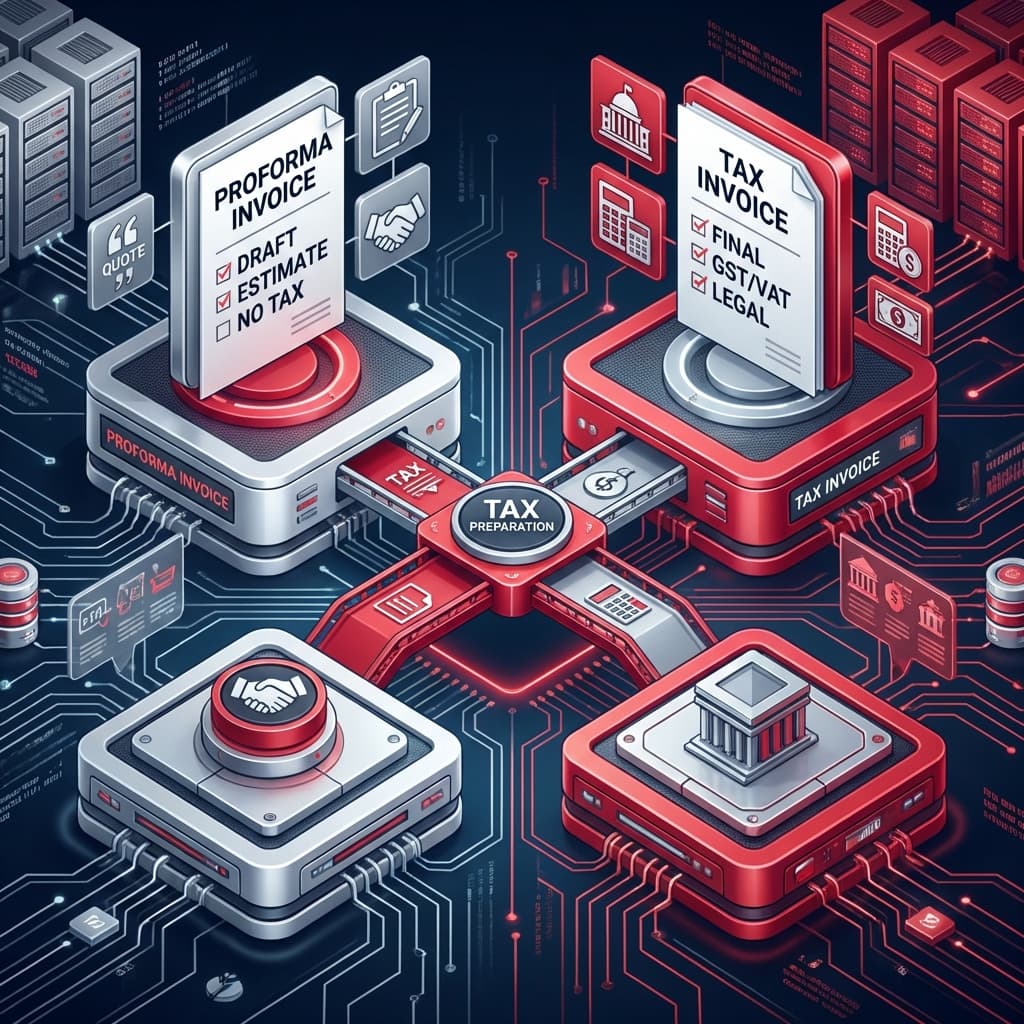
Tax Season 2026: Why You Need a Proforma Invoice
2026-01-12 • RedSun IT Services
The "Fake" Invoice
Imagine this: You are importing goods, or you are about to start a large landscaping project. The client asks for an invoice so they can arrange payment. You send your standard invoice. The accountant kicks it back: "We can't accept this. It's too early. Send a Proforma."
What just happened? You just encountered the accounting world's version of a "Official Estimate." Understanding the difference between a Proforma Invoice and a Tax Invoice is critical for keeping your books clean and avoiding nightmares during Tax Season 2026.
What is a Proforma Invoice?
Latin: Pro forma meaning "For the sake of form." Definition: A preliminary bill of sale sent to buyers in advance of a shipment or delivery.
Think of it as a "Draft Invoice." It says: "Dear Client, if you buy these 100 widgets, this is exactly what the commercial invoice WILL look like, including shipping and taxes."
Key Characteristics:
- Not a Demand for Payment: It is legally an estimate. You cannot force a client to pay a Proforma.
- No Accounting Impact: You do not record a Proforma invoice in your Accounts Receivable. It does not count as revenue yet.
- Flexible: Prices can change before the final deal is sealed.
Why use it?
- To help the buyer get internal approval for the purchase order.
- To help international buyers get import permits/Letters of Credit from their bank.
- To clarify the precise costs before goods are shipped.
What is a Tax Invoice?
Definition: The final, legal document requesting payment. Once you issue a Tax Invoice, the transaction is "real."
Key Characteristics:
- Legally Binding: The client is now obligated to pay.
- Accounting Event: You must record this in your books and pay sales tax/VAT on it (depending on your accounting method).
- Strict Format: In many countries (UK, EU, Australia), a Tax Invoice must have specific details (VAT number, Tax Date) to be valid.
The Golden Rule: Never issue a Tax Invoice until you are 100% sure the deal is happening. If you issue it and the client cancels, you might still owe taxes on that "ghost revenue" until you issue a Credit Note to fix it. Messy.
The Breakdown: Side-by-Side
| Feature | Proforma Invoice | Tax Invoice | | :--- | :--- | :--- | | Purpose | Estimate / Quote | Request for Payment | | Timing | Before goods shipped | After goods shipped / Service done | | Accounting | Ignored by Accountant | Recorded in Books | | Tax Liability | None | Yes (VAT/GST/Sales Tax) | | Title Change | Ownership stays with seller | Ownership transfers to buyer |
Checklist: How to Create a Proforma
Using our Invoice Generator, creating a Proforma is easy.
- Label it Clearly: The words "PROFORMA INVOICE" must appear at the top.
- Validity Date: Add a line: "Prices valid for 30 days." This protects you if costs rise.
- Details: Include everything that will be on the final invoice (Weight, Shipping, HS Codes for customs).
- No Invoice Number: Use a different numbering sequence (e.g., PF-1001) so it doesn't mess up your main invoice sequence.
Summary
- Use a Proforma to negotiate and confirm details.
- Use a Tax Invoice to get paid.
Keep them separate, and your accountant (and the IRS) will love you this tax season.