Intermittent Fasting & TDEE: How Timing Affects Your Metabolism
2026-01-20 • RedSun IT Services
The "Breakfast is Most Important" Myth
For years, we were told: "Eat breakfast to jumpstart your metabolism!" In 2026, Intermittent Fasting (IF) has flipped that advice on its head. Millions of people skip breakfast, eat all their calories in an 8-hour window (e.g., 12pm - 8pm), and report effortless weight loss.
But the question remains: Does Fasting change your TDEE (Total Daily Energy Expenditure)? Does it make you burn more? Or does it crash your metabolism?
The Science of 16:8
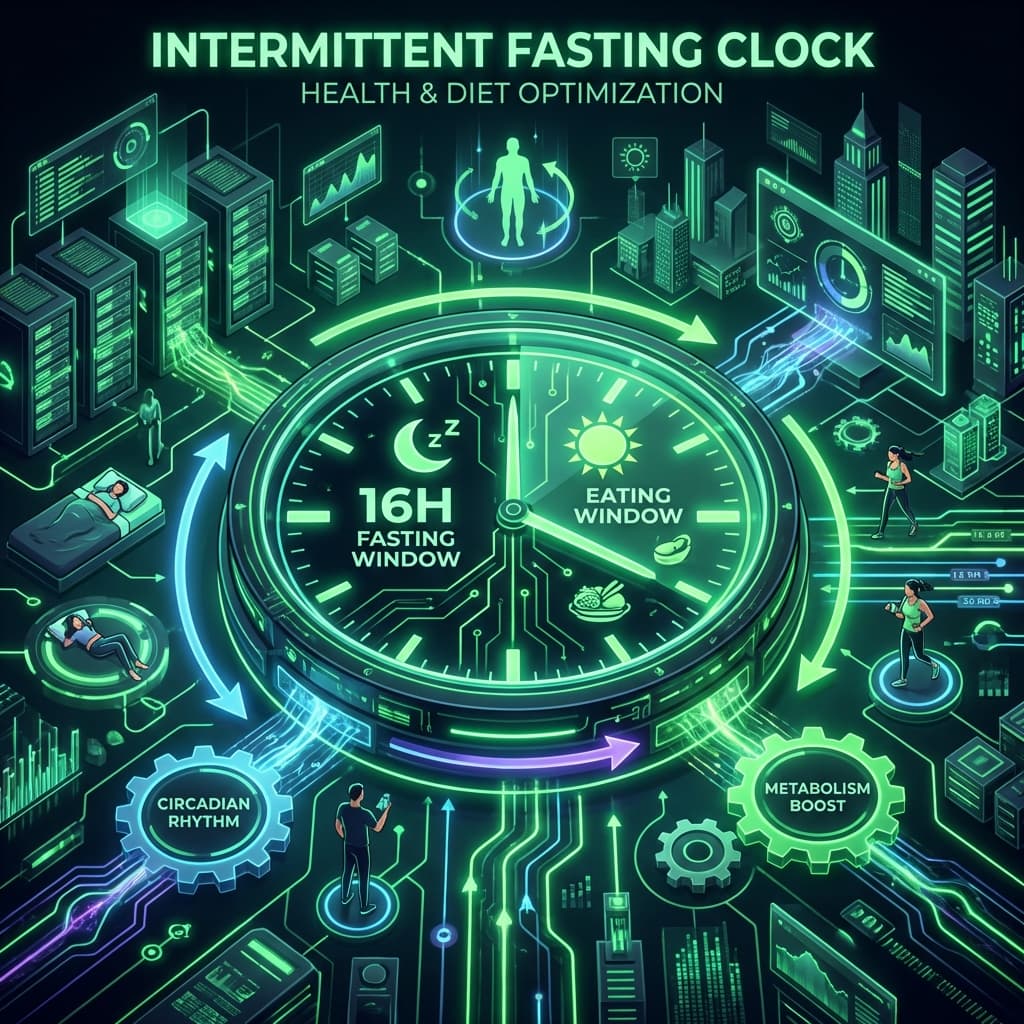
The most common fast is 16:8 (16 hours fasting, 8 hours eating). During the fasting window:
- Insulin Drop: Insulin levels crash. This signals the body to stop storing fat and start burning stored fat for energy.
- Growth Hormone Spike: HGH levels can increase as much as 5x, which preserves muscle mass.
- Norepinephrine: Your nervous system sends norepinephrine to fat cells, breaking them down.
Result: Short-term fasting can actually increase your metabolic rate by 3-14%. It does not "slow down" your metabolism (unless you fast for 3+ days, which is starvation).
Fasting vs. Calorie Restriction (The TDEE Math)
Fasting is not magic. It is just a tool to control calories. If your TDEE (Maintenance) is 2,000 calories.
- Scenario A: You eat 2,000 calories spread over 16 hours. -> Weight Stable.
- Scenario B: You eat 2,000 calories spread over 4 hours. -> Weight Stable.
Fasting does not magically erase calories. If you binge eat 4,000 calories in your "eating window," you will gain weight. The Superpower of IF: It is simply harder to overeat when you only have 8 hours to do it. You naturally cut out the late-night snacking and the sugary morning cereal. Most people naturally eat 20-30% less without counting.
How to Calculate TDEE for Fasting
- Use our Calorie Calculator to find your TDEE.
- Subtract 500 calories for fat loss.
- The Challenge: You must fit that number into your window.
Example: Goal: 1,800 Calories. Window: 12pm to 8pm.
- Lunch (12pm): 700 Cal (Chicken Salad & Avocado)
- Snack (4pm): 300 Cal (Yogurt & Berries)
- Dinner (7:30pm): 800 Cal (Steak, Potatoes, Veggies)
This creates a satisfying, large meal structure while still hitting the deficit.
Who Should NOT Fast?
- Pregnant/Nursing Women.
- History of Eating Disorders: Restriction can trigger binging.
- Underweight individuals.
Verdict
Intermittent Fasting is a behavioral hack that pairs perfectly with the math of TDEE. Know your number first. Then use fasting to help you stick to it.