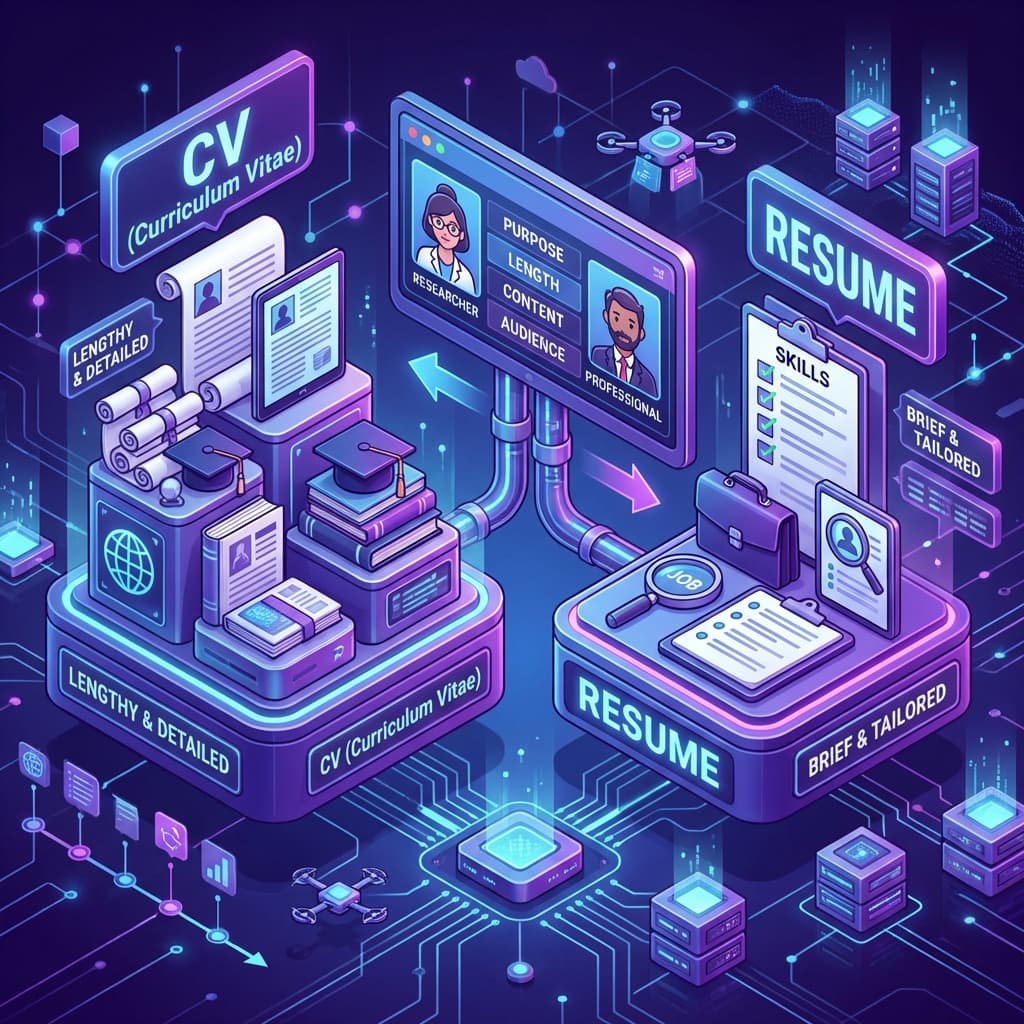
CV vs. Resume: When to Use Which (and How to Format Both)
2026-01-10 • RedSun IT Services
The Confusion is Real
You see a job posting. It asks for your "CV." You panic. Is that my resume? Is it something else? Do I need to list every book I've ever read?
In 2026, the terms "CV" and "Resume" are often used interchangeably, but they are not the same thing. Sending the wrong one can get your application tossed in the trash. Here is the definitive breakdown of the differences, and how to build both using our Online Resume Builder.
The Core Differences
1. The Resume (résumé)
- Origin: French for "Summary."
- Length: Short. 1-2 pages maximum.
- Focus: Competency. What can you do right now?
- Goal: To get a job interview.
- Region: The standard in the USA, Canada, and for most corporate jobs globally.
What goes in it? A curated highlight reel of your career. You customize it for every single job application. If you have 10 years of experience, you cut out the fluff. You focus on skills, achievements, and metrics.
2. The CV (Curriculum Vitae)
- Origin: Latin for "Course of Life."
- Length: Long. No limit (often 3-10+ pages).
- Focus: Credibility. What have you done in your entire life?
- Goal: To get a grant, tenure, or a fellowship.
- Region: The standard in Academia, Medicine, Science, and historically in the UK/Europe (though the "European CV" is shrinking to resemble a resume).
What goes in it? Everything. Every publication, research grant, conference presentation, award, degree, and certification. You rarely delete things from a CV; you just add to it.
When to Use Which?
Use a Resume If:
- You are applying for a regular job (Tech, Sales, Marketing, Admin).
- You are applying to a company in North America.
- The job description asks for a "Resume" or "CV/Resume."
Use a CV If:
- You are applying for an Academic position (Professor, Researcher).
- You are applying for a Medical role (Doctor).
- You are applying for a Grant or Fellowship.
- The job is in a country where "CV" is the strict legal term for the document (though in 2026, even in the UK, a 2-page summary is preferred).
Formatting Rules for 2026
The Golden Rule of Resumes: "Six Seconds"
Recruiters spend an average of 6 seconds scanning a resume.
- Layout: Clean, single column.
- Font: Sans-serif (Arial, Roboto).
- Structure: Reverse chronological (Newest job first).
- Strategy: Optimize for ATS bots. (See our Resume Mistakes Guide).
The Golden Rule of CVs: "Completeness"
A CV is not about speed; it is about thoroughness.
- Layout: Simple, scholarly headers.
- Sections: Education, Publications, Research, Awards, Affiliations.
- Strategy: Be exhaustive. Don't leave gaps.
How to Build Them
Whether you need a snappy 1-page Resume or a comprehensive academic CV, formatting them in Word is a nightmare. Margins break, bullet points misalign, and exporting to PDF ruins the layout.
The Solution: Use our Red Sun IT Online Resume Builder.
- For Resumes: Choose the "Modern" or "Professional" templates. They enforce brevity and impact.
- For CVs: Choose the "Academic" layout. It allows for unlimited sections and pages so you can list all 50 of your published papers without formatting errors.
Verdict: Unless you are becoming a professor, you probably need a Resume. Keep it short, keep it punchy, and get hired.